


Investing in real estate in the United Arab Emirates (UAE) is one of the most attractive opportunities for Slovaks and Czechs seeking a stable and profitable way to allocate capital. The UAE offers a favorable tax environment, secure investment conditions, and a rapidly growing property market. Its strategic location between Europe, Asia, and Africa enhances its international appeal, while modern infrastructure and a safe environment create ideal conditions for foreign investors.
The most common question among investors is whether to focus on Dubai or Abu Dhabi. Both cities offer distinct opportunities, differing in rental yields, property prices, lifestyle, and tenant types.
Dubai is known for its dynamism, luxury, and tourism. It attracts expats and short-term tenants seeking high rental returns and rapid property value growth.
Abu Dhabi, on the other hand, is characterized by stability, a slower pace, and a focus on families and long-term residents, making it ideal for investors who prefer predictable returns and secure long-term investments.
Both cities complement each other – Dubai offers dynamic capital growth and luxury projects, while Abu Dhabi provides stability and balance for an investment portfolio.
This article compares the real estate markets of Dubai and Abu Dhabi, including rental yields, infrastructure, tax and legal aspects, and investment recommendations for 2025.
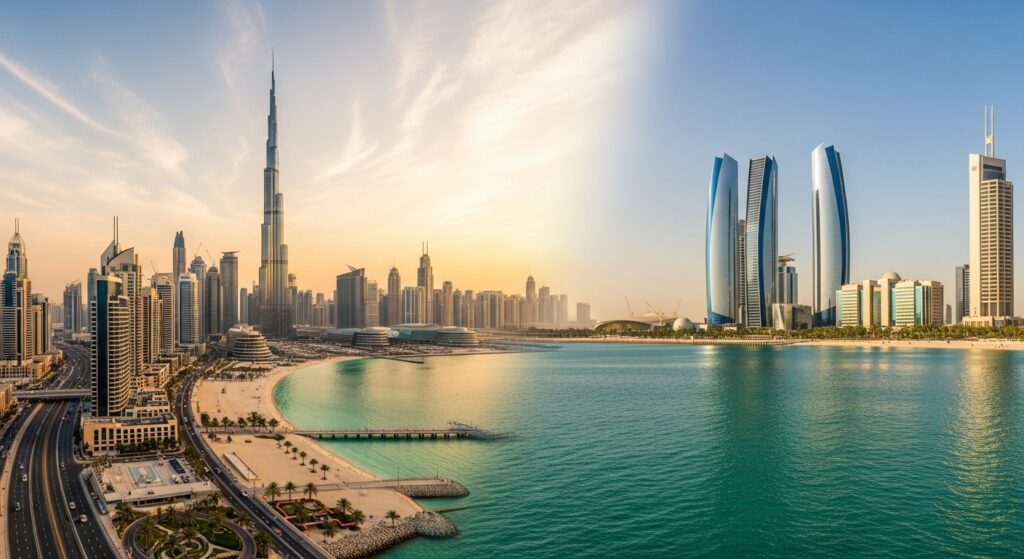
Overview of Dubai’s Real Estate Market
Dubai is among the most dynamic real estate markets in the world, with growth driven by continuous infrastructure development and modern residential and commercial projects. The city attracts foreign investors not only with luxury residences but also with high rental yields and opportunities in the short-term rental market.
Growth Dynamics and Expansion
Dubai is globally recognized for its rapid expansion and ongoing infrastructure development, making it a magnet for foreign investors. The city constantly adds new residential projects, luxury skyscrapers, commercial and entertainment complexes, hotels, and recreational facilities. This dynamic growth supports property capital appreciation, which is highly attractive for investors.
In addition to new projects, the city invests in transport infrastructure, including the metro, highways, and public transportation, improving accessibility and property values. Dubai also focuses on developing tourism, international exhibitions, and conferences, which increases demand for short-term rentals and provides a stable cash flow for property owners.
Thanks to the combination of modern projects, strategic location, favorable tax environment, and stable legal framework, Dubai has become one of the most attractive destinations for foreign real estate investment.
High Rental Demand
Dubai hosts a large number of expatriates and tourists, creating a stable and continuously growing demand for both short-term and long-term rentals. The city is an international hub for work, business, and tourism, increasing the need for quality accommodation for residents and visitors alike.
The most sought-after areas, such as Dubai Marina, Jumeirah Village Circle, Downtown Dubai, or Expo City, are popular among tenants due to their modern amenities, good accessibility, transport connections, and proximity to business and entertainment centers. Projects in these areas often offer higher rental yields, providing investors with stable cash flow and faster return on investment.
ROI by Top Locations
When investing in Dubai real estate, it is important to consider rental yields, which vary by location and property type:
- Dubai Marina is very popular among expatriates and tourists, ensuring stable rental demand and consistent returns.
- Downtown Dubai is known for luxury apartments, skyscrapers, and proximity to business and entertainment centers, making it an attractive location for investors.
- Jumeirah Village Circle appeals to families and investors seeking projects with higher cash flow and relatively affordable prices.
- Expo City is part of the Expo 2020 development project, offering a promising investment location with potential property value growth.
Rental yields may vary depending on property type, amenities, service availability, and surrounding infrastructure. When investing, it is advisable to combine location analysis with expected demand and long-term property value growth trends.
Overview of Abu Dhabi’s Real Estate Market
Abu Dhabi, the capital of the United Arab Emirates, represents a stable and well-regulated real estate market, ideal for investors seeking long-term and predictable returns. Unlike dynamic Dubai, where yields are often driven by short-term rentals and rapid capital appreciation, Abu Dhabi is characterized by a steadier growth pace and a strong focus on quality housing and infrastructure.
Stability and Regulated Growth
Abu Dhabi features slower but stable market growth, providing investors with predictability and lower risk of sudden price fluctuations. Property values increase gradually and in a controlled manner, reducing investment risk compared to the fast-moving Dubai market.
For investors prioritizing stability, long-term returns, and a secure investment environment, Abu Dhabi is an ideal choice for building a property portfolio and planning long-term investment strategies. Additionally, the city offers advantages such as lower service charges, a quieter lifestyle, and growing appeal for families and expatriates seeking long-term residence.
Focus on Families and Long-Term Residency
Abu Dhabi is known for its calm pace and emphasis on quality living, making it attractive to families and long-term residents. Modern residential developments often include schools, healthcare facilities, parks, sports amenities, and community centers, supporting a comfortable and secure lifestyle.
This focus on long-term living means that properties in Abu Dhabi experience stable rental demand, primarily from families and professionals seeking comfort and safety. Investors can therefore expect predictable cash flow and lower vacancy risks, which is ideal for conservative investment strategies and long-term portfolios.
ROI by Top Locations in Abu Dhabi
- Saadiyat Island – A prestigious area known for its luxury residences and high quality of life, attracting tenants willing to pay premium rents.
- Yas Island – Particularly attractive for tourists and short-term rentals, while still offering stable rental demand.
- Al Reem Island – Suited for families and long-term residents, ensuring predictable cash flow for investors.
Rental yields in Abu Dhabi are generally slightly lower than in Dubai; however, investments here offer greater stability, regulated growth, and predictable property values, making it an ideal choice for conservative investors and long-term portfolios.
ROI Comparison – Dubai vs. Abu Dhabi
Dubai is characterized by high and stable demand for rentals from expats and tourists, ensuring a regular rental income. Areas such as Dubai Marina, Downtown Dubai, Jumeirah Village Circle, and Expo City offer a wide range of short-term and long-term rental opportunities and have the potential for faster property value growth. The dynamic and competitive market provides opportunities for investment projects, including off-plan properties.
Advantages of Dubai:
- Stable and high demand for rentals from expats and tourists
- Opportunities for both short-term and long-term rentals
- Potential for faster property value growth
- Dynamic market with numerous investment opportunities, including off-plan projects
Disadvantages of Dubai:
- Higher acquisition costs in prestigious locations
- Intense competition among investors
- Market sensitivity to economic fluctuations, especially in short-term rentals
Abu Dhabi represents a more stable and conservative market, ideal for a long-term investment portfolio. Prestigious areas such as Saadiyat Island, Yas Island, and Al Reem Island attract tenants willing to pay higher rents. Predictable demand and regulated property value growth provide investment security and stability.
Advantages of Abu Dhabi:
- Stable and predictable demand for rentals
- Conservative property value growth
- Prestigious locations with tenants willing to pay premium prices
- Ideal for long-term and lower-risk investment portfolios
Disadvantages of Abu Dhabi:
- Slightly lower rental yields compared to Dubai
- Less dynamic market with slower price growth
- Limited opportunities for new development projects and off-plan properties
Conclusion:
Dubai is suitable for investors seeking a combination of regular rental income and potential for faster property value growth, willing to accept higher acquisition costs and moderate market volatility. Abu Dhabi is a more stable alternative, offering predictable income and conservative value growth, ideal for long-term and lower-risk investments. When making a decision, it is essential to consider your investor profile, preferred risk level, and long-term investment goals. Combining an analysis of location, expected demand, and property value growth trends will help you select the optimal investment.
Tax and Legal Differences
When investing in real estate in the UAE, it is crucial to understand the tax and legal aspects, which differ between Dubaiand Abu Dhabi. These factors significantly influence investment profitability, operating costs, and ownership security.
Fees in Dubai vs. Abu Dhabi
When purchasing property in the UAE, the DLD fee (Dubai Land Department registration fee) applies in both cities. In Dubai, however, additional fees often arise related to registration and transaction processing, which may vary depending on the developer or type of project.
In Abu Dhabi, these additional costs are generally lower and more transparent, reducing the overall entry costs for the investor. Therefore, when planning an investment, it is important to consider not only the basic DLD fee but also potential administrative and service charges in a specific location or project.
Service Charges and Maintenance Costs
Service charges in Dubai are usually higher, reflecting luxury residential projects, extensive amenities, and a higher frequency of short-term rentals. These fees can significantly impact the net return on investment, particularly in projects targeting tourists and expats.
In contrast, service charges in Abu Dhabi are generally lower, and maintenance costs are more stable. This makes investments in Abu Dhabi more predictable, with less risk of unexpected expenses, which is advantageous for long-term investors seeking a stable cash flow.
Legal Certainty for Foreign Investors
Dubai and Abu Dhabi offer foreign investors a high degree of legal certainty. The ownership registration process is clearly defined and protected by legislation, ensuring that property rights are secure.
Contractual rights and a transparent transaction system allow investors to safely purchase properties, whether residential or commercial. Legal protection also applies to freehold ownership, leasehold, and off-plan projects, reducing investment risk and providing confidence when planning a long-term portfolio.
Lifestyle and Infrastructure
When deciding on a real estate investment in the UAE, lifestyle and infrastructure are key factors. Although Dubai and Abu Dhabi are part of the same country, they offer distinct environments that influence the type of tenants, rental demand, and overall investment attractiveness.
Dubai – Luxury, Tourism, and Short-Term Rentals
Dubai is characterized by a dynamic lifestyle, luxury developments, and a focus on tourism and short-term rentals. The city attracts investors seeking high rental yields and faster returns on investment. Its modern infrastructure, including an extensive metro system, highways, two international airports (DXB and DWC), and a concentration of hotels, shopping centers, and entertainment venues, makes Dubai a globally connected hub.
This dynamic environment supports a high frequency of short-term rentals and quick capital appreciation. Dubai also offers rich cultural and social experiences, such as Expo City, Dubai Opera, Museum of the Future, and numerous international sporting events. For investors, this means the potential for faster returns and higher short-term yields, although it may come with higher volatility in occupancy and rental income.
Abu Dhabi – Calm Pace, Long-Term Family Living
Abu Dhabi is known for its calmer pace of life and focus on comfortable living for families and long-term residents. Modern residential projects often include international schools, high-quality healthcare facilities, parks, sports complexes, and community centers, creating an ideal environment for safe and convenient living.
This family-oriented approach ensures stable demand for long-term rentals and predictable cash flow for investors. Compared to Dubai, there is a lower proportion of short-term rentals, resulting in lower volatility of returns, fewer tenant turnovers, and reduced operating costs.
Abu Dhabi also boasts high-quality infrastructure, with well-planned road networks, easy access to key areas of the city, a growing number of international flight connections, and a wealth of cultural and recreational facilities. Residential projects on Saadiyat Island and Yas Island offer not only premium living but also rich opportunities for cultural and social engagement.
Transportation, Schools, Healthcare, and Culture
Both Dubai and Abu Dhabi offer modern and high-quality infrastructure, enhancing living standards and increasing property value. Each city has a wide network of international schools, universities, and educational institutions, which is a critical factor for expatriate families. Healthcare facilities in the UAE rank among the most advanced in the Middle East, with both cities investing in state-of-the-art technology, qualified personnel, and service accessibility.
While Dubai is more dynamic and tourism-oriented, Abu Dhabi focuses on family living and long-term residency. Its infrastructure is more evenly distributed, with less traffic congestion and a calmer environment. Abu Dhabi offers top-tier schools, hospitals, community centers, cultural landmarks, and islands dedicated to art and recreation. Key attractions include the Louvre Abu Dhabi, the future Guggenheim Abu Dhabi, and Etihad Arena on Yas Island. This approach creates a stable environment for long-term investment and predictable rental income.
From an investor’s perspective, Dubai offers faster returns and higher short-term yields, whereas Abu Dhabi provides stability, lower volatility, and appeal to long-term tenants.
Where to Invest in 2025?
When deciding where to invest in the UAE, it is crucial to consider your investment goals, preferred type of tenants, and risk tolerance. Dubai and Abu Dhabi offer different opportunities, so it is advisable to tailor your strategy to your specific objectives.
For Short-Term Investors Seeking High Yields – Dubai
Dubai is ideal for investors aiming to maximize returns from short-term rentals. The dynamic real estate market, combined with a high number of tourists and expatriates, creates strong and stable demand for apartments and luxury residences. Areas such as Dubai Marina, Downtown Dubai, Jumeirah Village Circle, and Expo City are particularly attractive for this type of investment, as they provide higher ROI and faster capital appreciation.
Investors can also leverage modern platforms for managing short-term rentals, which simplify operations and help maximize profits.
For Long-Term Investors Seeking Stability – Abu Dhabi
Abu Dhabi is suitable for those who prefer stability and long-term property holdings. The market is less volatile than Dubai, reducing investment risk. The city focuses on family-oriented living and offers high-quality infrastructure – including schools, hospitals, parks, and community centers.
Locations such as Saadiyat Island, Yas Island, and Al Reem Island provide stable rental income and predictable property value growth. This approach is ideal for conservative investors who want to safely preserve capital while generating reliable cash flow.
Combined Strategy
For investors looking to benefit from both markets, a combined strategy can be effective. Part of the portfolio can be invested in dynamic Dubai, offering higher short-term yields and rental flexibility, while another portion can be allocated to stable Abu Dhabi, providing long-term security and a less volatile market.
Trim Real Estate assists investors in selecting the optimal strategy based on goals, budget, and preferred investment type. With their support, it is possible to accurately assess risks and returns, design portfolio allocation, and choose locations that best match the investor’s profile.
FAQ – Most Frequently Asked Questions
Does Dubai have a higher ROI than Abu Dhabi?
Yes, Dubai generally offers higher average rental yields, especially in popular areas and for short-term rentals.
Are properties in Abu Dhabi cheaper than in Dubai?
Property prices in Abu Dhabi are often lower than in Dubai, particularly outside of luxury areas.
Which city is better for short-term rentals?
Dubai is more suitable for short-term rentals due to its tourist traffic and expatriate community.
Where are service charges higher?
Service charges are higher in Dubai due to more luxurious projects and the dynamic nature of the market.
Can one invest in both cities simultaneously?
Yes, a combined strategy allows diversification of the portfolio and benefits from both markets.
Dubai offers higher ROI, a dynamic market, and opportunities for short-term rentals, while Abu Dhabi provides stability, a family-friendly environment, and long-term investment security. The best choice depends on your investment goals – whether you seek high short-term yields, stable property appreciation, or a combination of both. Trim Real Estate can advise on which city is most advantageous for your investment and assist with the entire purchase process.

