


Dubai has become one of the most attractive destinations for real estate investment in recent years. Slovak and Czech investors are drawn by the stable economy, modern lifestyle, and high rental yields. The market offers a wide range of projects – from luxury apartments to off-plan properties with flexible payment plans – making it an ideal place to diversify an investment portfolio.
However, investing in Dubai is not entirely without risk. Price volatility, unreliable developers, or insufficient legal knowledge can affect investment returns. Therefore, it is important to carefully select a project, verify the developer, and work with a trusted real estate agency that knows the local market and ensures a smooth purchase process.
For Slovaks and Czechs, the advantage is the ability to communicate in their native language and utilize the services of a Slovak team directly in Dubai. Trim Real Estate provides comprehensive services – from property selection and financing to ownership management and administration – which minimizes risks and simplifies the investment process.
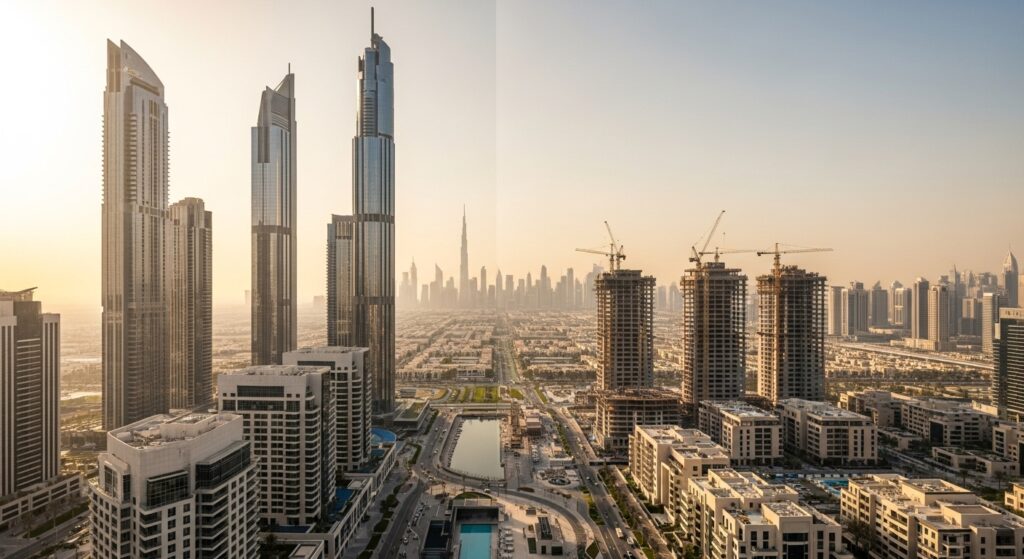
Why Invest in Dubai?
Investing in Dubai offers a combination of safety and high returns. The market is regulated, transparent, and supported by the strong UAE economy. Tax benefits, modern infrastructure, and high rental demand make Dubai an attractive destination for foreign investors.
Stable UAE Economy
The United Arab Emirates has a diversified economy that is not reliant solely on oil. The finance, tourism, logistics, and technology sectors grow every year, supporting the stability of the real estate market.
Economic stability provides investors with confidence and predictability in investment returns. Slovak and Czech investors can plan their investments with realistic expectations and a long-term strategy.
Investing in Dubai’s stable economy also enables strategic decisions regarding rentals and other investment opportunities with minimal risk.
Tax Advantages – No Income Tax, Favorable VAT
Dubai levies no income tax or capital gains tax on rental income or property sales. This means investors can achieve higher net returns.
VAT applies only to certain services and new developments, allowing investors to plan their cash flow accurately and avoid unexpected expenses.
The tax environment further enhances Dubai’s attractiveness, as the combination of a stable market and low taxation contributes to a higher ROI and reduces overall investment costs.
High Rental Yields
Rental yields in Dubai are higher than typical returns in many European cities.
Stable rental demand from expats, tourists, and digital nomads ensures predictable investment returns.
Investors can combine long-term and short-term rentals, spreading risk and increasing income flexibility.
Modern Infrastructure and Megaprojects (Expo City, Dubai South, Dubai Islands)
Dubai is investing billions into infrastructure and large-scale megaprojects, which increase property values and contribute to the long-term growth of the real estate market.
Developments such as Expo City, Dubai South, and Dubai Islands offer luxurious residential and commercial spaces in highly attractive locations.
Investors can take advantage of the rising demand in these areas, where both the expected ROI and property appreciation are significantly high.
Investment Opportunities
Dubai offers a wide range of investment options, from off-plan projects to luxury apartments and villas. Each category has its own specific advantages that may appeal to investors depending on their goals and preferences.
Off-plan projects allow buyers to purchase property before construction is completed, often at a lower price and with the potential for faster appreciation. However, they also carry certain risks, such as construction delays or dependency on the developer’s reliability.
Luxury apartments are ready-to-move-in properties in prime locations, providing immediate rental income, but they require a higher initial investment.
Villas represent exclusive living with strong appeal to long-term tenants, though their maintenance costs can be higher and resale liquidity lower.
Therefore, it is important to carefully consider which investment strategy best aligns with your financial goals and risk tolerance.
Off-Plan Projects – Lower Entry, Flexible Payments
Off-plan projects allow the purchase of a property during construction, which reduces initial costs. Developer installment plans are often flexible and enable investors to pay gradually according to construction milestones.
The advantage is also the possibility of acquiring the property at a lower price than after completion and flexibility in cash flow planning. The disadvantage is that the project is not yet completed, so there is a risk of delays or changes to the project.
Off-plan investments are suitable for investors who want to optimize the entry price and have the patience to follow the construction progress.
Luxury Projects by Emaar, Damac, Nakheel
Luxury projects offer exclusive services, modern design, and prestigious locations. Renowned developers such as Emaar, Damac, and Nakheel provide greater assurance of quality and reliability.
Luxury properties attract high-paying tenants and expats, increasing the potential for rental returns. Working with local real estate agencies ensures a smooth purchase process and property management.
The advantage is long-term project stability and prestige, while the disadvantage may be a higher entry price and less flexibility in payment plans.
Growing Demand for Rentals (Expats, Tourists, Digital Nomads)
Dubai is an international hub for expats, tourists, and digital nomads, which increases rental demand. Areas such as Marina, Downtown, Palm Jumeirah, and JVC have high occupancy rates and stable cash flow.
Property management through verified agencies ensures that investors receive passive income without the need for personal administration.
The growing demand ensures that the investment will have long-term returns and a good ROI.
Golden Visa as an Investment Bonus
Investors who purchase a property above a specified value can obtain a Golden Visa, which allows long-term residence for up to 10 years.
The Golden Visa increases the attractiveness of the investment, as it provides security and the possibility to reside in Dubai long-term.
For Slovaks and Czechs, this is an additional incentive to invest in Dubai, as the combination of property ownership and a residence visa enhances comfort and security.
Risks to Consider
Investing in Dubai offers attractive opportunities, but it also carries certain risks. These include monitoring price cycles, which can affect property value. It is also important to verify the reliability of the developer to avoid issues with construction or project quality. Management fees, which can reduce your net return, should not be overlooked.
As a foreign investor, you should also consider currency risk and differences in legal regulations compared to Slovakia, which may affect ownership rights or rental arrangements.
Price Cycles and Market Volatility
Property prices in Dubai change in cycles, and the market can be volatile. Investors should be prepared for possible short-term price declines.
Long-term investments reduce risk, but it is important to monitor market trends and avoid purchasing at the peak of a price cycle. Real estate cycles are a natural part of the market, so strategic planning and patience are key to achieving a successful ROI.
Risks in Choosing a Developer
Not all developers maintain high standards. Verifying references and previous projects is essential.
Working with a reputable agency like Trim Real Estate minimizes the risk of collaborating with an unreliable developer.
Selecting the right developer ensures project quality, adherence to deadlines, and a smooth investment process.
Management Fees and Their Impact on ROI
Property management and maintenance fees can significantly affect rental yields. Investors must consider these costs when planning ROI.
Some projects have higher fees due to luxury services or location. Careful analysis of these costs allows for realistic yield expectations and prevents unpleasant surprises.
Currency Risk (EUR vs AED)
Investing in AED means that returns are affected by the exchange rate. Fluctuations in EUR/AED can change the value of returns when converted to euros.
Investors can minimize risk through currency hedging or by choosing an appropriate financing strategy. Currency risk is a natural part of foreign investments and should be planned for in advance.
Legal Differences Compared to Slovakia
Dubai has a different legal system, which may be unfamiliar to Slovak investors. Knowledge of local regulations is essential for the safe purchase and management of property.
Legal assistance and collaboration with a local agency ensure that the investor complies with all legal requirements. Without legal support, complications may arise during ownership transfer or investment management.
ROI and Returns – What You Can Expect
Investing in Dubai offers various opportunities for property appreciation. Annual rental yields depend on the type and location of the property, with some projects potentially experiencing capital growth over time. Investment returns vary by type – off-plan properties may provide higher capital appreciation, while completed apartments and villas generally offer more stable rental income.
Average Yields by Location (Marina, Downtown, Palm, JVC, Expo City)
Dubai Marina is one of the most attractive locations for apartment investment, offering high occupancy rates and thus stable rental income. Palm Jumeirah is an exclusive area with luxury residences, where rental yields are slightly lower than in Marina, but demand and prestige increase property value in the long term.
Jumeirah Village Circle (JVC) and Expo City are rapidly developing areas with high capital appreciation potential. ROI can be very attractive here, especially for off-plan projects, where the investor benefits from a lower initial investment and expects a price increase upon completion. Conversely, new peripheral projects may have lower yields, as rental demand is still developing and infrastructure is gradually improving.
When planning an investment, it is therefore crucial to consider the combination of location, project type, target rental segment, and current demand. A well-chosen location and project can significantly increase ROI and shorten the investment payback period.
Comparison with Bratislava and Prague
Market data from Bayut & dubizzle showed that the average gross rental yield in Dubai in 2024 ranged between 5 % and 9 %, depending on the location and property type. The top-performing areas were:
- International City (apartments) – 9.3 %
- Jumeirah Village Circle (JVC, apartments) – 8.1 %
- Dubai Silicon Oasis (apartments) – 7.7 %
- Dubai Marina (apartments) – 6.5 %
- Downtown Dubai (apartments) – 5.2 %
- Palm Jumeirah (villas) – 4.6 %, according to DXB PROPERTIES.
Rental yields in Dubai are significantly higher than in Bratislava or Prague, making it an attractive destination for investors seeking stable passive income. Investing in Dubai therefore offers potentially higher returns, strong liquidity, and the possibility of capital appreciation in the medium to long term, making it a more advantageous alternative than traditional European markets.
The average gross rental yield in Slovakia is 4.88 % (Q2, 2025). Previously, in Q2 2024, the rental yield was 5.29 %, according to Global Property Guide.
The average gross rental yield in the Czech Republic is 3.28 % (Q2, 2025). Previously, in Q2 2024, the rental yield was 3.65 %, according to Global Property Guide.
This difference is caused by several factors. First, there is high demand for real estate in Dubai, supported by the growing number of expatriates, entrepreneurs, and professionals from around the world who come for work and lifestyle.
Another factor is the intensive development of infrastructure – modern transport links, shopping centers, recreational areas, and new residential projects increase the city’s attractiveness for tenants. Tourism also ensures that short-term rentals can provide additional income, further increasing the overall return on investment.
For an investor, this means that investing in Dubai real estate not only provides higher passive income but often also faster capital recovery compared to European cities. The difference in ROI also provides greater room for portfolio diversification – by combining projects with different rental types (long-term, short-term) and locations, it is possible to maximize returns and minimize risks associated with market volatility.
Forecast Until 2030
Property prices in Dubai are expected to grow steadily until 2030. This growth will be supported by strategic infrastructure projects, the development of commercial and residential zones, and increasing demand for quality housing and rentals. Diversifying investments across different types of properties – whether completed projects or off-plan – and carefully selecting the location allows investors to maximize returns while reducing investment risk.
Investors who monitor current market trends, utilize professional advice, and spread their capital across multiple projects can expect stable growth in the value of their portfolio. Additionally, this approach provides an attractive passive rental income while offering flexibility to respond to market changes. Such a strategy allows for an effective combination of safe and promising investments, increasing long-term returns and portfolio stability.
Is Investing in Dubai Safe?
Investing in Dubai is safe, as the market is regulated by the Dubai Land Department and the Real Estate Regulatory Agency (RERA). Foreign investors are protected by law, and the purchase process is transparent.
How to Minimize Risk
Before investing, it is crucial to thoroughly verify the developer, their references, and previous projects. Legal verification of contracts and conditions ensures that the entire transaction is secure and free of unpleasant surprises. This approach minimizes the risk of project delays or legal complications.
The Slovak team in Dubai provides a complete service – from property selection, through rental management, to administrative support. Working with professionals significantly reduces stress and risks associated with investing abroad. Trim Real Estate is the ideal partner for Slovaks and Czechs who want to invest safely and efficiently.
Spreading investments between completed and off-plan properties allows for optimized returns and reduced overall risk. Completed projects provide a stable cash flow, while off-plan projects offer the potential for higher capital appreciation.
Verifying the Developer and Legal Framework
Before investing, it is essential to thoroughly verify the developer, their reputation, references, and the success of previous projects. Verification includes checking whether the developer met deadlines, maintained construction quality, and ensured customer satisfaction. Legal verification of all contracts, terms, and licenses ensures that the transaction is secure and compliant with local regulations. This step minimizes the risk of project delays, legal disputes, or loss of investment.
Collaboration with a Trusted Agency (Trim Real Estate – Slovak Team in Dubai)
Working with a professional agency experienced in the local market and with Slovak clients significantly reduces the risks of investing abroad. The Slovak team in Dubai provides a comprehensive service – from consulting on property selection, reviewing legal documents, to managing rentals and handling administrative tasks. This support saves time, reduces stress, and allows the investor to focus on planning returns. Trim Real Estate has proven to be an ideal partner for Slovaks and Czechs who want to invest safely, efficiently, and with maximum transparency.
Diversification Between Ready and Off-Plan Projects
Spreading investments between ready (completed) and off-plan properties is a proven strategy to optimize returns and mitigate risk. Ready projects provide immediate rental income and a stable cash flow, making them suitable for investors who prefer lower risk. Off-plan projects, on the other hand, offer the potential for higher capital appreciation but carry greater uncertainty and dependence on the developer. The right combination of these project types allows investors to leverage the advantages of both approaches, increase overall ROI, and reduce the impact of market volatility, making the investment balanced and more effective.
FAQ – Most Frequently Asked Questions
What is the average rental yield in Dubai?
The average rental yields range between 7-9% per year, depending on the location and type of project.
Is Dubai suitable for long-term investment?
Yes, Dubai offers a stable market, modern infrastructure, and growing rental demand, making it an attractive long-term investment destination.
What are the risks of investing in off-plan projects?
The main risks include construction delays, changes to the project, or price developments. Proper verification of the developer reduces these risks.
Can I finance an investment property with a mortgage?
Yes, Slovak investors can use mortgages directly from banks in Dubai or installment plans offered by developers.
Which locations have the highest ROI?
Marina, JVC, Expo City, and Palm Jumeirah are among the locations with the highest ROI and stable rental occupancy.
Dubai offers attractive opportunities: high returns, tax benefits, a stable market, and modern infrastructure.
The main risks include price volatility, unreliable developers, and management fees.
The highest ROI can be found in Marina, JVC, and Expo City. Planning to invest? Contact Trim Real Estate – your Slovak partner for investments in Dubai.

