Investing in real estate in Dubai is becoming increasingly attractive for Slovaks as well. A modern city with luxurious infrastructure, high rental yields, and a stable market offers a safe and transparent environment for foreign investors. This guide will explain step by step how to buy property in Dubai – whether as a Slovak or as a foreign investor, what the process is, the fees, and the financing options.
Dubai has become one of the main centers for foreign real estate investment over the past decade. Slovaks see an opportunity here to diversify their portfolio while securing passive income.
Market stability – The government of the United Arab Emirates has created a legislative environment that protects the interests of buyers.
Attractive lifestyle – Dubai offers luxurious living, safety, and modern services.
High rental yields – The average gross rental yield in the United Arab Emirates is 4.87% (Q2 2025). Previously, in Q4 2024, the rental yield was 4.92%, according to Global Property Guide.
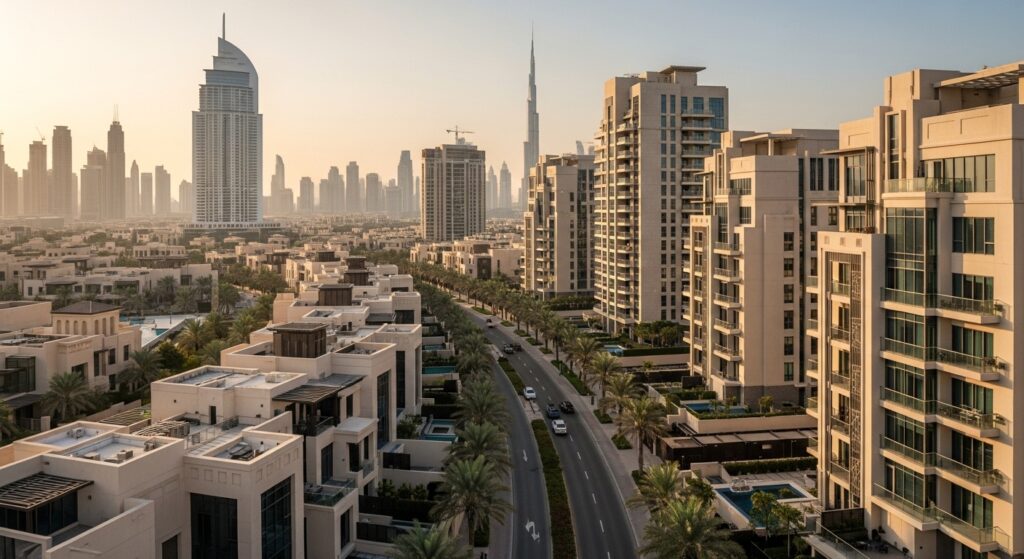
Can a Slovak Buy Property in Dubai?
Investing in real estate in Dubai is becoming an increasingly popular choice among Slovaks. The city offers attractive returns, a stable legislative environment, and a unique lifestyle. This guide will walk you through the entire process, from rules for foreign investors, through the purchase procedure, financing, to visas, taxes, and the most common mistakes to avoid.
Rules for Foreign Owners
Dubai is one of the most open real estate markets in the region. While in some Gulf countries ownership is limited to citizens or residents, in Dubai foreigners – including Slovaks – can own property in their own name. This type of ownership is called freehold and means that the buyer has full rights to use, rent, sell, or inherit the property. It is not just a long-term lease (leasehold), but true ownership recorded on the title deed in the name of the foreign investor.
For foreign buyers, it is important to know that ownership is protected by local legislation and registered with the Dubai Land Department. This provides assurance that the purchase is legally binding and comparable to standards in Europe.
Freehold Zones Where Foreigners Can Buy
The option to purchase property for foreigners is limited to selected areas known as freehold zones. These are specially defined locations where foreign investors have the same rights as locals.
The most sought-after include:
Dubai Marina – a modern seaside district with luxury apartments, a promenade, and a yacht marina.
Downtown Dubai – the city center with the iconic Burj Khalifa, luxury residences, and the Dubai Mall.
Business Bay – a dynamic business district with modern office and residential projects.
Jumeirah Village Circle (JVC) – a family-friendly area with more affordable apartments and houses, suitable for long-term living and investment rentals.
Palm Jumeirah – an artificial island shaped like a palm, known for luxury villas and resorts.
These areas are popular not only for their strategic location and infrastructure but also for their high investment potential – rentals in these zones provide stable returns, and demand from expats remains consistently high.
No Restrictions for Slovak Citizens (Same Process as for Other Foreigners)
Slovaks have no special restrictions when buying property in Dubai. The same process applies to them as for investors from other countries:
- Selecting a suitable property in one of the freehold zones.
- Signing a reservation agreement and paying the reservation fee.
- Concluding the purchase agreement and registering with the Dubai Land Department.
There is no need to obtain any special permits, a local partner, or citizenship. Even a residence visa is not a requirement for the purchase – although property ownership can subsequently help in obtaining one.
This means that Slovak investors have fully open doors to invest in one of the most dynamic real estate markets in the world, with the entire process being relatively fast, transparent, and secure.
Step-by-Step Purchase Process
Buying property in Dubai is a fairly straightforward process, but it is important for a foreign investor to know what to expect. Thanks to clearly defined rules and government oversight, the entire procedure is transparent and secure.
Choosing a Developer or Real Estate Agency
The first and most important step is selecting a reliable partner. There are many developers and real estate agencies on the market, but not all offer the same level of professionalism. A verified partner can ensure that all contracts, documents, and legal requirements are handled correctly.
An advantage for Slovaks is working with companies that communicate in their native language and operate directly in Dubai, such as Trim Real Estate. A Slovak team with knowledge of the local market can facilitate communication and protect the buyer from unnecessary risks.
Reservation and Signing the Contract
After selecting a specific property, the next step is signing the so-called Reservation Agreement. This agreement ensures that the seller or developer removes the property from the market and guarantees that it will not be sold to another buyer. Reservation is a standard step that gives the buyer time to arrange financing and review all documents.
Deposit and Payment Schedule
The deposit usually ranges between 10–20% of the property price. Buyers should verify the official guidelines regarding the deposit amount before making a binding decision, according to Lawyers in Dubai. The remaining amount is paid according to the agreed payment schedule. This schedule is often very flexible – developers offer various payment plans that can be spread over several months or years, or linked to construction milestones.
Approval by the Dubai Land Department (DLD)
Every transfer of ownership must be confirmed by the Dubai Land Department (DLD) – the official government institution overseeing the transparency and legality of real estate transactions. This step guarantees that everything is conducted according to the law and that the buyer is fully protected.
Completion of Transfer and Ownership Registration
The final phase is the full payment of the purchase price and all related fees. Once these conditions are met, the DLD officially registers the buyer as the property owner and issues the Title Deed. From this moment, the new owner is the legal proprietor with the right to use, rent, sell, or inherit the property.
Financing Options for Slovaks
Investing in property in Dubai does not mean that the buyer must have the entire amount available immediately. Slovak citizens have several options for financing the purchase – from traditional mortgages to installment plans or direct cash payments. Each option has its specifics and advantages.
Mortgages for Foreigners in Dubai
Slovaks can apply for a mortgage directly with banks in the United Arab Emirates. Banks typically provide a portion of the property’s value, with the loan amount and conditions depending on the client’s creditworthiness, the type of property, and its value.
Loan conditions usually include proof of income, stable employment or business, and a clean debtor register. The advantage is the possibility to spread payments over a longer period, reducing the monthly financial burden. The disadvantage is that the approval process can be lengthy and requires multiple supporting documents.
Developer Installment Plans
One of the most popular options is installment plans offered directly by developers. These are often more flexible than mortgages and tailored to foreign investors.
A common model is that part of the purchase price is paid during the project’s construction, with installments linked to specific construction milestones. The remaining amount is paid upon completion of the building, sometimes with the option to further spread payments over several years. The advantage is a simpler process without complex bank approvals and availability even for investors without a stable income in the UAE.
Cash Purchase
The simplest and fastest method is paying in cash. The buyer pays the full amount directly at the signing of the contract or according to an agreement with the developer.
The advantage is a faster ownership transfer process, no obligations to the bank or developer, and often a discount on the price. The disadvantage is the need to have a large amount of capital available, which is not always possible.
Fees and Taxes When Buying
When purchasing property in Dubai, it is important to consider not only the price of the property itself but also the related fees and taxes, which can affect the overall cost. These items include administrative fees, management fees, and specific tax rules applicable in the United Arab Emirates.
DLD Fee (4%)
When a property is transferred in Dubai and there is a change of the ultimate beneficial owner (UBO), the Dubai Land Department charges a property transfer fee of up to 4% of the property’s actual market value at the time of transfer, according to Investin Dubai.
This fee covers the registration of ownership rights, administrative costs, and ensuring the legal entry in the official property register. The fee is usually shared between the buyer and the seller by agreement, but in practice it is often paid by the buyer.
Service Charges by Project
Most residential complexes or development projects require service charges, which cover the maintenance of common areas, security services, landscaping, repairs, and other operational costs of the complex. The amount of these charges varies depending on the project, type of property, and range of services provided. They are usually paid annually or semi-annually, and it is important to take them into account when calculating the total cost of ownership.
Taxes
In Dubai, there is no personal income tax and no capital gains tax on property sales. VAT applies only to selected services and products, such as legal services, real estate agency fees, or certain developer services, but not directly to the purchase of residential property. This makes Dubai an attractive investment destination in terms of tax efficiency.
Visas and Long-Term Residency When Buying Property
Investing in real estate in Dubai offers not only financial benefits but also the possibility of obtaining a residence visa. For foreign investors, Dubai is highly attractive not only because of its stable property market but also due to its simple and transparent visa system. A residence visa allows legal residence, access to healthcare and education, and often facilitates business activities or opening bank accounts.
The visa is linked to property ownership, and its type depends on the investment amount and the intended duration of stay. Slovak citizens have the same rights as other foreign investors and can therefore take advantage of all available options, including the long-term Golden Visa or shorter residence permits.
For investors, it is important to consider in advance which type of visa they wish to obtain, as this affects the method of financing the property and the options for asset management in Dubai. Proper visa planning ensures a smooth stay and protection of the investment.
Golden Visa – Conditions
The Golden Visa is valid for 10 years, and the holder may sponsor their parents and siblings (subject to the conditions and requirements set by the Federal Authority for Identity and Citizenship, according to the ICP).
Among its main benefits are the right to legal residence with family members, access to education and healthcare, and the ability to rent out or sell the property without complications. The Golden Visa also simplifies banking and administrative processes such as opening a bank account, registering a company, or obtaining a driver’s license.
For Slovaks planning a long-term stay and a secure investment, the Golden Visa represents a highly attractive option. Obtaining it is relatively straightforward once the financial criteria are met and all required documents are submitted, providing stability and convenience for the entire family.
Other Types of Residence Visas for Investors
In addition to the Golden Visa, there are shorter-term residence visas that are directly linked to property ownership. These visas are typically valid for two or three years and allow legal residence for the specified period. They are suitable for investors who do not wish to-or cannot-invest in property worth two million AED.
The requirements for obtaining such a visa include owning property above a certain minimum value, registering it with the Dubai Land Department, and maintaining ownership throughout the visa’s validity period. If the property is sold, the visa must be renewed or a new one obtained.
Shorter residence visas offer investors greater flexibility-they can experience life in Dubai, gain insight into the real estate market, and gradually plan larger investments. These visas also grant access to banking services, the ability to rent out property, register a vehicle, and enroll children in schools, making them a practical option for families planning a temporary stay.
The Most Common Mistakes Slovaks Make When Buying Property
When investing in real estate in Dubai, even experienced investors can make mistakes that affect the profitability or safety of their investment. Slovak buyers should proceed carefully and plan each step thoroughly to avoid the most common pitfalls.
Choosing an Unreliable Developer
One of the most frequent mistakes is choosing a developer without verifying their background and reliability. Not every developer adheres to high standards of quality and construction deadlines. It is therefore crucial to check references, past projects, and feedback from other investors.
A good developer provides clear contracts, a transparent payment schedule, and reliable support throughout the construction process. Slovak investors often underestimate the importance of having a local partner or real estate agency that can verify the developer’s credibility and minimize risks.
Choosing an unreliable developer may lead to delays, poor construction quality, or legal complications that can significantly impact the investment’s return.
Underestimating Additional Costs
When buying property, many investors focus only on the property’s purchase price. However, they often forget about additional expenses that can form a significant part of the total investment. These include fees for registration with the Dubai Land Department, service charges, maintenance, utilities, and insurance.
It is also important to consider costs related to renting out the property or furnishing the interior. Slovak buyers should prepare a complete financial plan in advance to avoid unpleasant surprises after the purchase.
Underestimating additional costs can substantially affect the profitability and real return on investment. It is therefore advisable to discuss all potential fees with the developer or real estate agency beforehand.
Unrealistic ROI Expectations
Many investors have overly optimistic expectations about returns. Some expect a high annual profit that is not realistic in practice. The average ROI in Dubai varies depending on the location, type of property, and current market conditions. Unrealistic expectations may lead to disappointment and poor investment decisions. Slovak investors should rely on real data, compare projects, and take market trends into account.
A sound investment strategy includes realistic ROI expectations, thoughtful cash flow planning, and portfolio diversification to minimize risks associated with investing in Dubai.
Is Investing in Dubai Safe?
Investing in real estate in Dubai is generally considered safe. The market is regulated by local authorities-primarily the Dubai Land Department (DLD) and the Real Estate Regulatory Agency (RERA) – which oversee transparency and transaction security. These institutions ensure that ownership rights are clearly defined and that property transfers are legal and properly registered.
For foreign investors, including Slovaks, there are clear legal frameworks and protection under the law. The purchase process is transparent, contracts are standardized, and fees are predictable. Moreover, the Dubai Land Department offers electronic verification of ownership, which reduces the risk of fraud and ambiguity.
Despite the secure and well-regulated environment, it is essential to verify developers and projects before purchasing. Cooperation with reputable real estate agencies familiar with the local market is highly recommended, as they can provide professional guidance throughout the entire investment process.
For more information, read our article Is Investing in Dubai Safe?
FAQ – Most Frequently Asked Questions
Can a Slovak citizen buy an apartment or a house in Dubai?
Yes, in so-called freehold zones, Slovaks have the same ownership rights as any other foreign buyers.
What is the minimum down payment when purchasing a property?
A deposit of 10-20% of the property’s value is typically required.
Is rental income in Dubai taxed?
No, rental income is not subject to tax.
How long does the purchase process take?
For a completed property, the process takes around 30 days; for off-plan projects, it depends on the payment schedule.
Is it better to buy a completed property or an off-plan project?
A completed property allows for immediate rental income, while an off-plan project offers a lower entry price and more flexible payment terms.
Interested in buying property in Dubai? Rely on Trim Real Estate – a Slovak team based directly in Dubai, providing a full range of services from property selection and financing to ownership registration and visa consulting.